
I’ve recently taken part in two writing retreats at Hardwick Hall, an Elizabethan building that dates back to 1590. The retreats are day-long events that provide space, time and structure for writing – whether that be fiction, poetry, planning or academic writing. During the retreat, we have allocated breaks which I’ve used to enjoy the wonderful gardens around the hall. It was on one of those walks that I began to see the different views of the hall as metaphors for my writing practices. This blog shares photos of those views and connects each photo with a reflection on my own writing.
My reflections started from seeing the front of Hardwick Hall just after I’d finished editing and refining a piece of writing about my doctoral research. I connected the satisfaction of completing that piece to the calm joy of looking at the symmetry of the stone and glass. I then began to seek out more views and think about how each one connected to the processes and practices of writing. Every time, the view came first as a stimulus for me to reflect on my own practice. Here are my reflections, beginning with the finished piece and working through different stages of writing.
The front façade – A completed piece of writing
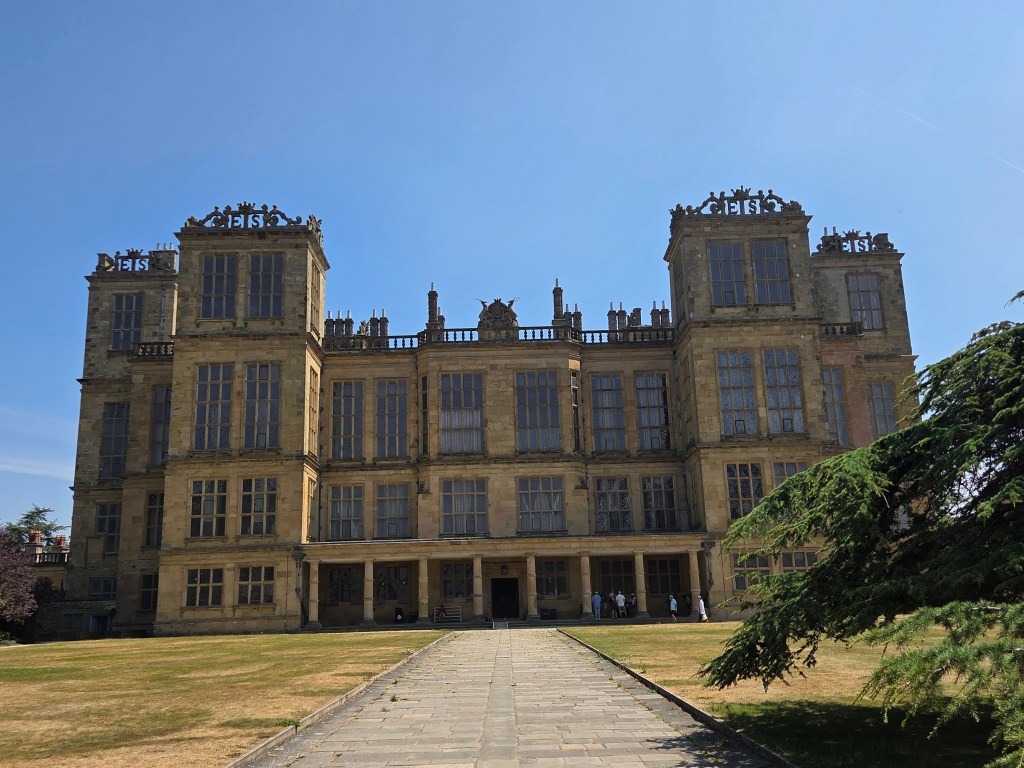
This is the front façade of Hardwick Hall. It represents the finished version of writing, which is complete, published and visible to the world. This view reminds me that my writing has a goal, and that goal is often linked to someone else reading it. As a visitor sees Hardwick Hall built with stone and glass, so readers see the words I have crafted and connected as a coherent piece. Both took patience, revision, and the willingness to keep working until nothing more needed to be added and nothing could be taken away.
Through the gatehouse – Glimpses of progress in writing
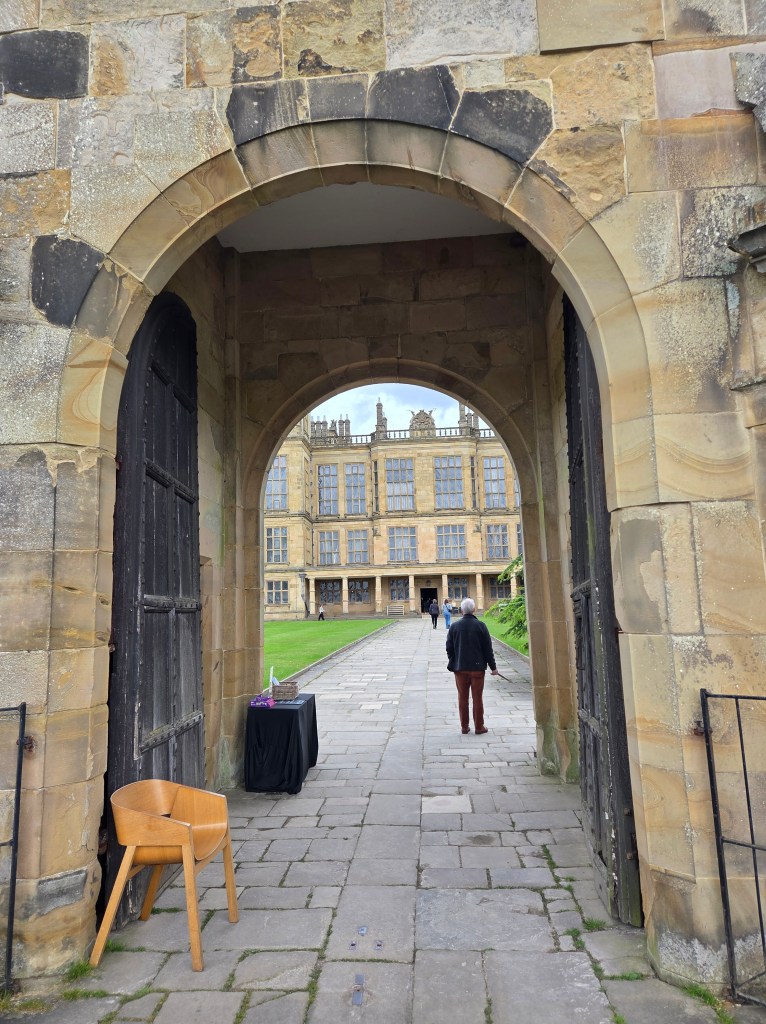
This picture shows Hardwick Hall as seen through the gatehouse. It is the view that visitors would have seen as they approached the hall in carriages. In this photo, the promise of a magnificent building is there, but not everything can be seen yet. This reminds me of how I often feel when I start to write. I have in mind what I want to create, and I am excited by what that might look like. Yet it is also frustrating. I cannot see the full picture yet, and parts of my writing are uncertain or unsure.
The back view – Writing as a process of construction
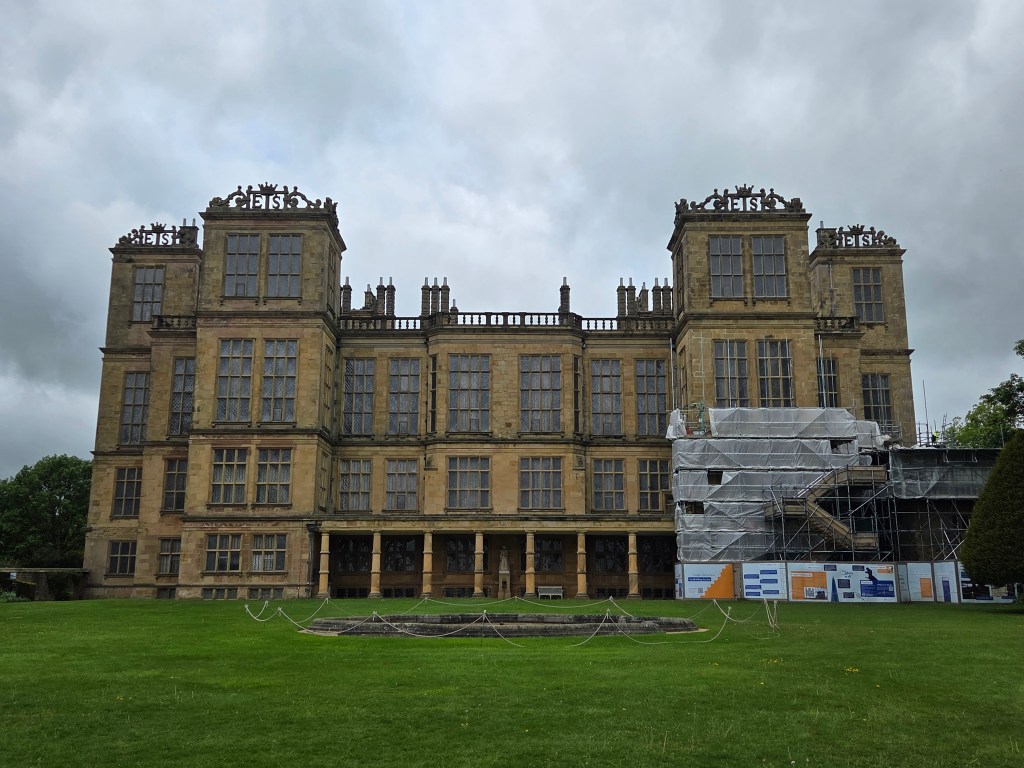
This is the back view of Hardwick Hall, and the contrast from the front façade is clear. This building, in fact, is not perfect – it is undergoing maintenance. This view speaks of the work which goes into writing, such as revising writing to take into account feedback, editing to meet a word count requirement, or changing styles to fit a template. Often this is intensive and invisible. It takes time and effort to write (even if GenAI and LLMs would have us believe otherwise).
A close-up view – Keeping everything in perspective
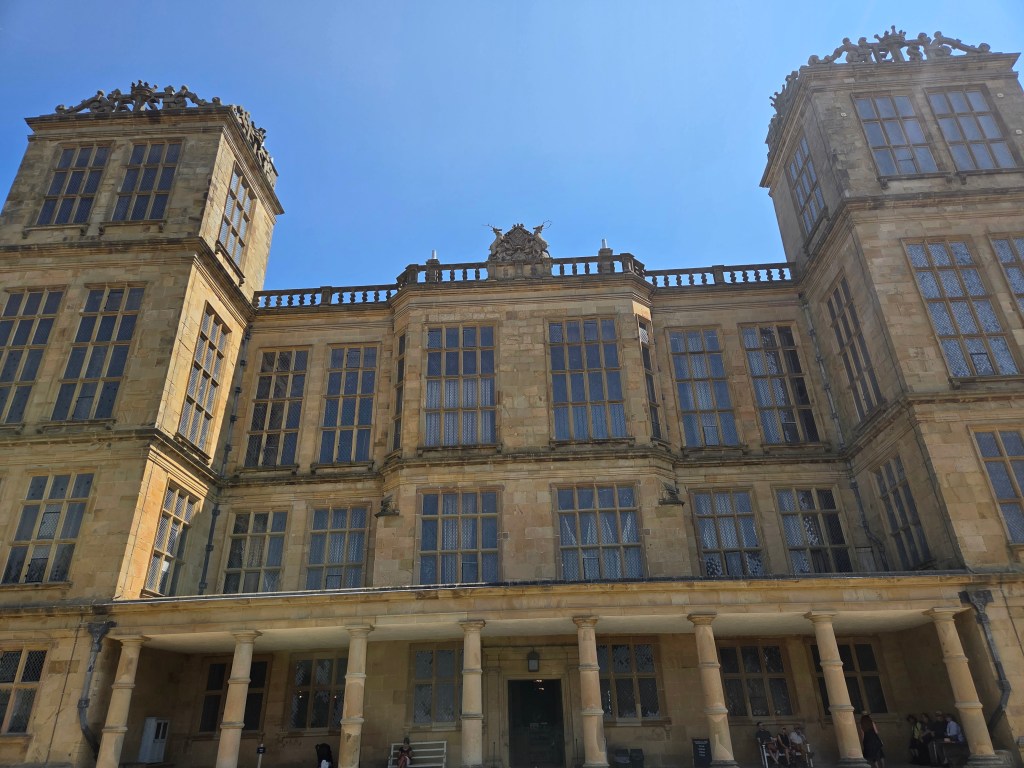
Here is another view of the front façade, but this time the view is deliberately too close to the hall. I took this photo purposely, as it reminded me of the times when I can become too focused on one particular detail in my writing. Ironically, this happened when I was writing this blog. I started to try and find a word or phrase which described reflexive practice through views of a building. I ended up on a half-hour detour through names of research methods and various compound German words. The blog, like this view, began to feel overwhelming. I took a few steps back so I could zoom out.
Blocked by a tree – Overcoming obstacles
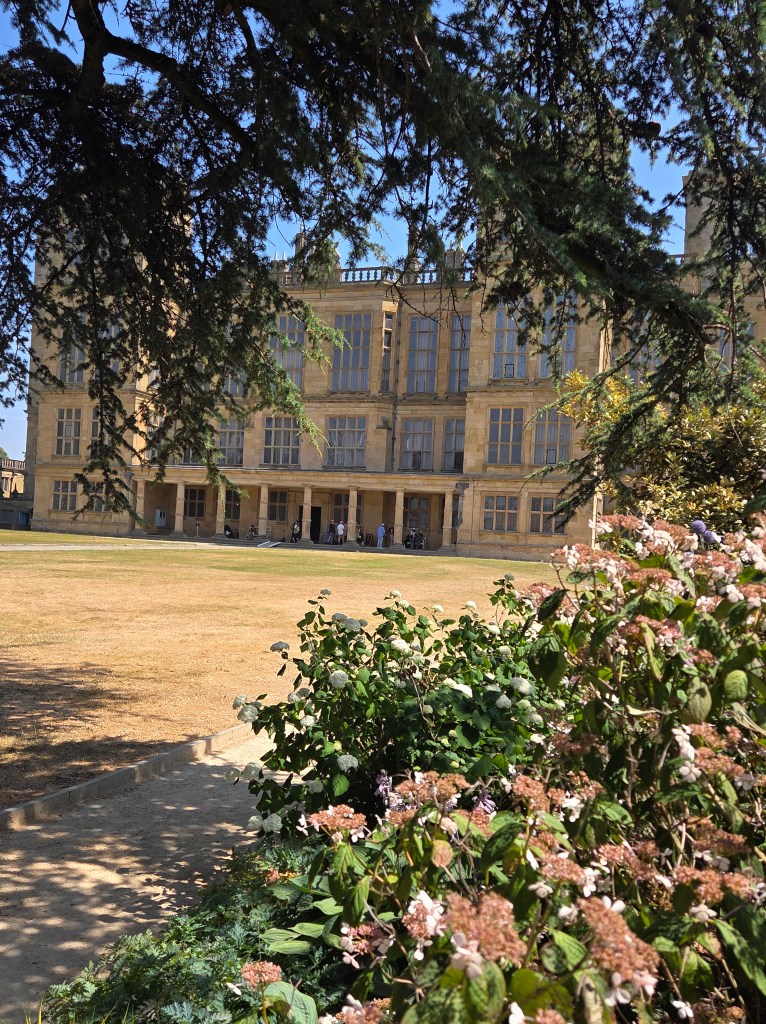
In this photo, Hardwick Hall is largely blocked by a large tree, and much of it cannot be seen. This view represents the obstacles that crop up during writing. Sometimes these are practical – lack of time, lost notes, a document that did not save. At other times, these barriers are internal – the feeling of self-doubt, the challenge of trying to communicate an idea clearly and succinctly, or the frustration of reading something that sounded great but is actually trite or clumsy. These obstacles sometimes stop me from seeing the end goal as clearly, and risk losing my way in trying to resolve a myriad of small details.
Hardwick Old Hall – The cutting room floor
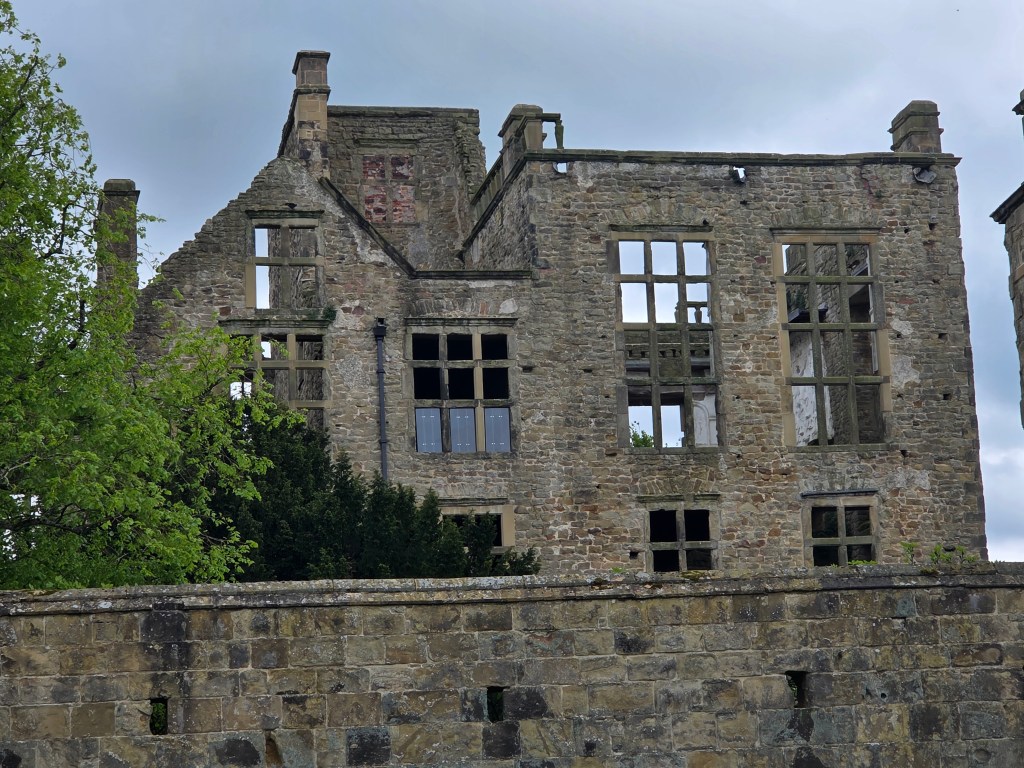
This hall is Hardwick Old Hall. Built as the first building on the Hardwick estate, it is now largely ruined and overshadowed by its successor. This view represents the writing that doesn’t make it, that was cut from the final version, or that stayed in draft. This happens relatively frequently in my writing, as I iterate through various versions of a piece and refine my arguments. But Hardwick Old Hall still stands, and is still visited, and this serves as a reminder to me that deleted words are never worthless. Instead, they are an important part of the journey of writing.
Reflecting on your own practice
I began this blog in a garden, looking up at a building and recognising something true about my own writing. The views of Hardwick Hall have now become a personal toolkit for understanding where I am in my writing at any given moment. When I feel the frustration of the gatehouse and the tantalising glimpse of something not yet fully formed, I know I am at the beginning of something. When I feel the effort of the back view, I know I am in the middle of something worth finishing. And when I see the front façade in my mind, I know what I am working towards.
This practice of using images as stimuli for reflection on your own writing process draws on a long tradition of thinking about how sensory encounter with the world generates self-knowledge. But you don’t need the theory to try it. You just need a place that means something to you, and a willingness to look. The views may surprise you!
Find out more about Hardwick Hall and Hardwick Old Hall.
Find out more about the Bolsover Cultural Corridor and Writing East Midlands.
[Note: Eagle-eyed readers may spot that the photos in this blog were taken on two different days, at two different retreats, and that one day was considerably sunnier than the other.]
 CSEd PhD