
The stories we tell ourselves about our research journeys can transform our experience
If you’ve ever described your PhD as “climbing a mountain” or “navigating uncharted waters,” you’re not just using descriptive language – you’re engaging in something far more powerful. The metaphors we use to describe our postgraduate research journeys don’t just reflect our experiences; they actively shape them.
What is a metaphor?
A metaphor is defined as a figure of speech in which a name or descriptive word or phrase is transferred to an object or action different from that to which it is literally applicable. In the picture below, author Shannon Hale uses the metaphor of building a sandcastle to describe writing.

The metaphors we use can influence our expectations and experiences of doctoral study. Here are some examples. If the PhD journey is described as “building knowledge brick by brick,” this sets the expectation of methodical, foundational work. Or if the bricks in question are Lego, then expectations change to something more fun and creative. A different framing is that postgraduate work is “navigating uncharted territory,” which highlights discovery and adventure. Each metaphor carries different implications for how we approach our work and what we expect from the journey.
The Rich Landscape of PhD Metaphors
A research study conducted in Australia revealed the diverse ways postgraduate students conceptualize their experiences. The authors organised their findings about the metaphors used by students into several categories:
Mechanical metaphors such as rollercoasters and gearboxes emphasised the ups and downs, the complex interconnected systems, and the need for all parts to work together.
Individualistic metaphors like hurdlers, mountain climbers, and jungle explorers focussed on personal challenge, achievement, and self-reliance in facing obstacles.
Organic metaphors like blooming flowers and rivers emphasised natural growth, flow, and development over time.
Balance metaphors included jugglers and seesaws to highlight the challenge of managing multiple competing demands.
Community metaphors ranged from art galleries, where work was displayed and critiqued to the Lone Ranger, emphasising isolation and self-reliance).
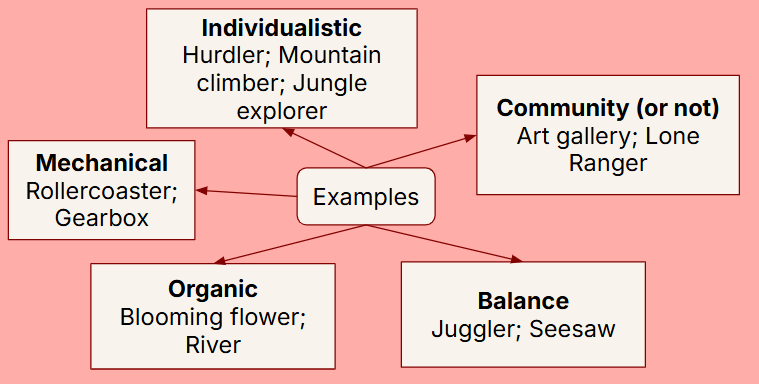
Metaphors used by PhD students (Shelley et al., 2017)
My PhD Quest
I imagine my PhD journey through the metaphor of a quest. Like the heroes of ancient myths and modern fantasy tales, I see my doctoral studies as full of challenges, allies, mentors, and sometimes what seem like insurmountable obstacles.
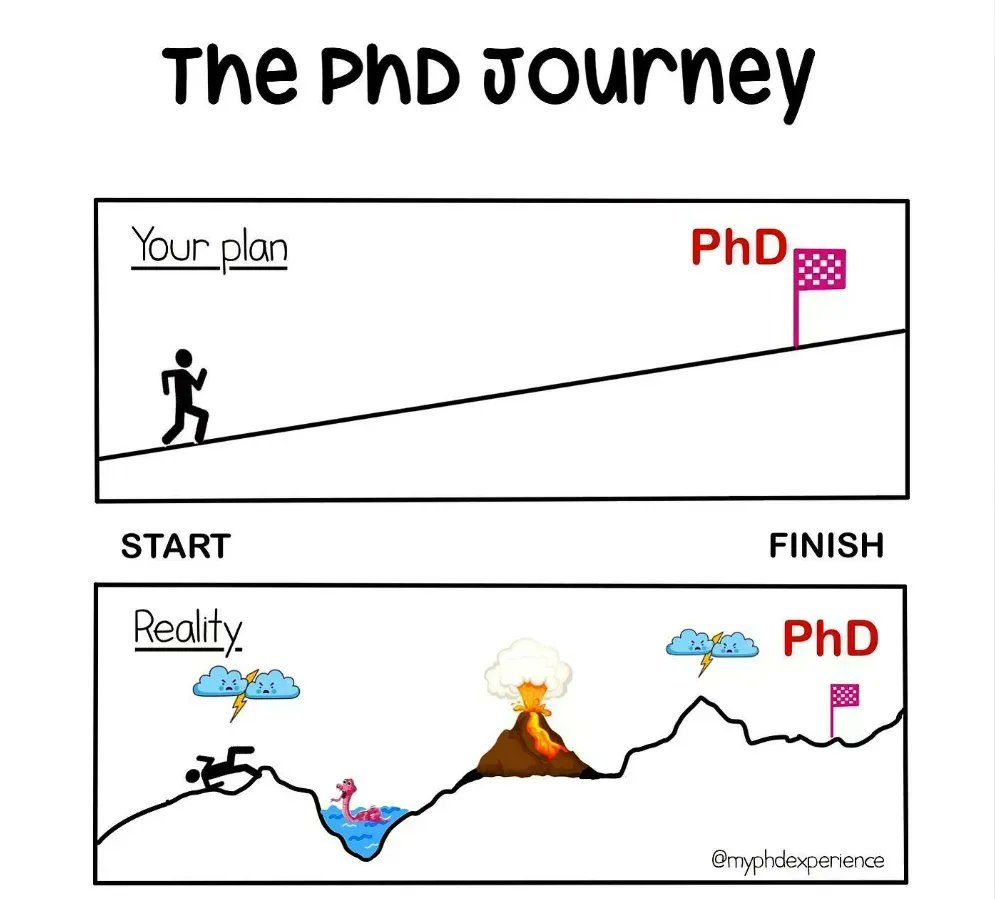
At the beginning of this quest, I realised that this framing meant I was looking for success by searching for some external magical artefact – a perfect methodology, a “how-to” guide that would tell me everything I needed to know, or a single paper or book that would serve as a almanac. Every time I came up against a challenge, I searched with the conviction that somewhere out there was the key to unlock my PhD success.
But then I found my quest metaphor drew on another idea: “It was with you all along”. The real learning opportunities weren’t to be found in some external artefact waiting to be discovered. My own curiosity, my persistence, my unique perspective, and my resilience in the face of setbacks are the true sources of power on my PhD quest.
This realisation has been both liberating and daunting. It means I don’t need to wait for external validation or the perfect opportunity to move forward. It also means taking full ownership of my journey. The quest metaphor reminds me that explorers don’t succeed because their path was easy. They succeed because they kept going when it was hard.
The Transformative Potential of Metaphor
Metaphors provide a valuable tool for self-reflection and monitoring research progress. Changing metaphors can help to reframe challenges. If thinking of research as mountain climbing feels exhausting, perhaps reimagining it as tending a garden might offer a more sustainable framework. While no single metaphor captures the full complexity of the PhD journey, the right metaphor at the right time can offer resilience during difficult phases and clarity during confusing moments.
As Lakoff and Johnson argued in their 1980 work Metaphors We Live By, metaphor is a fundamental mechanism of mind that structures how we think and act. Their conceptual metaphor theory demonstrated that metaphors structure our most basic understandings of experience and can shape our perceptions and actions without our ever noticing them. What makes this insight particularly powerful for PhD students is that the stories we tell about our research journeys actively shape our lived reality. By choosing our metaphors consciously and thoughtfully, we can transform not just how we describe our PhD experience, but how we experience and navigate it.
 CSEd PhD