
It’s 7 am in the UK, and as I wake up with a cup of coffee and check my phone, I notice several messages from colleagues who are just finishing their workday on the other side of the world. I quickly scan the conversation, catch up on progress with our latest research project, and respond to a query. Working as part of an international research team requires flexibility, alertness and agility. Following the publication of two papers at CompEd 2025 in Gaborone, Botswana, I’m reflecting the challenges and opportunities presented by international academic partnerships.
Academic Research from CSEd Botswana
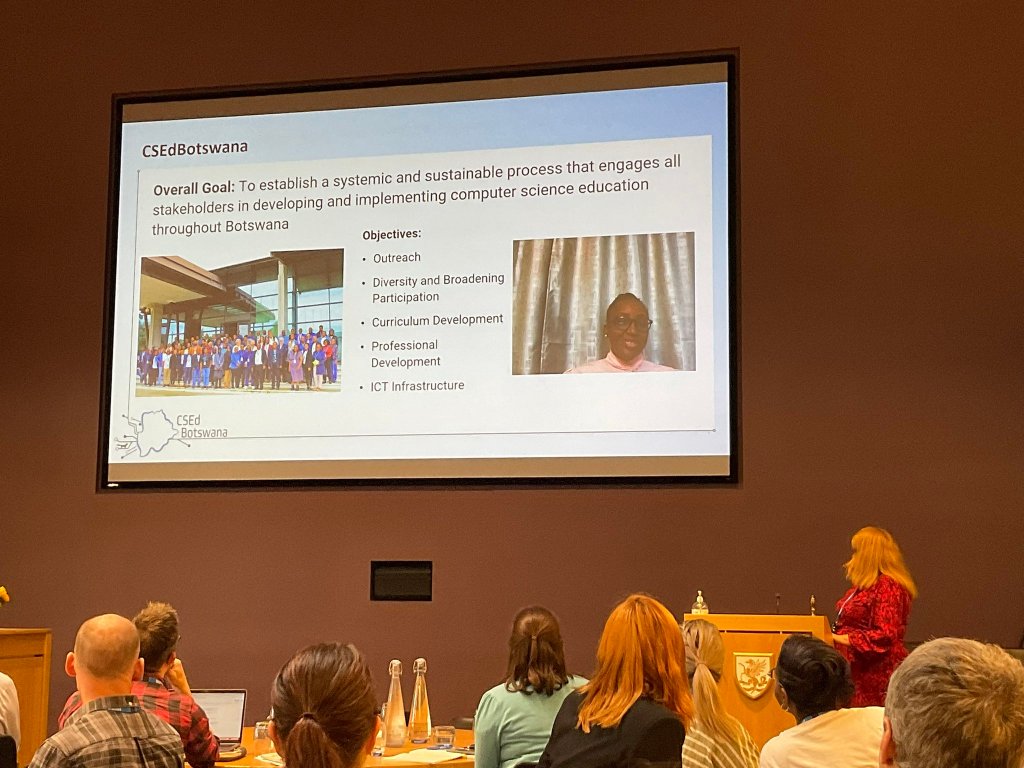
As part of my work volunteering with CSEd Botswana, I participate in academic research to explore how Computer Science education can be effective and engaging for young learners. Our team has a number of academic publications and the list is growing. I first became involved by taking a small role in writing about the first very “Hour of Code” which took place in Botswana in 2023. From this inaugural event, we published a work-in-progress paper with findings that showed the positive impact of the event on students’ perceived importance of programming but no significant impact on their interest in pursuing programming. I was fortunate enough to have the opportunity to co-present this paper at WiPSCE 2023 in Cambridge alongside Dr Ethel Tshukudu, founder of CSEd Botswana, who appeared on a pre-recorded video. Our current team includes members from Botswana, the UK and the USA.
Navigating Challenges
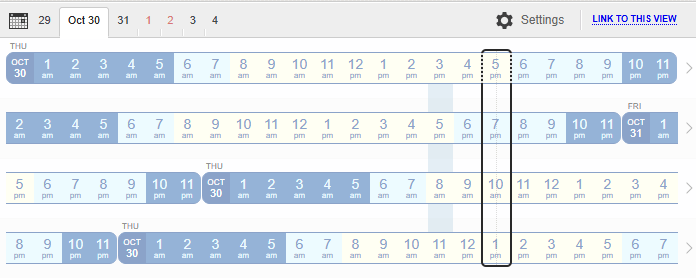
Of course, international collaboration isn’t without its challenges. For example, scheduling meetings across several time zones means someone is always compromising. Tools such as World Time Buddy help to plan timings whilst accounting for extra complications such as daylight saving time changes. That way, we can make sure that everyone has the opportunity to contribute equitably, whether they are in the Western or Eastern Hemisphere, and in the Global North or South.
Collaborating across the Global North and South has also made me think carefully about what it means to work fairly and respectfully as part of an international team. I don’t want to reproduce historical patterns of imbalance or assume that expertise flows in one direction. Instead, I contribute my time, resources and energy, and listen to and learn from the perspectives and practices of my collaborators. In this way, we can co-construct knowledge from our diverse perspectives.
Our CompEd 2025 Contributions
These challenges and triumphs have shaped the two pieces of work which were presented at CompEd 2025 in Gaborone, Botswana.
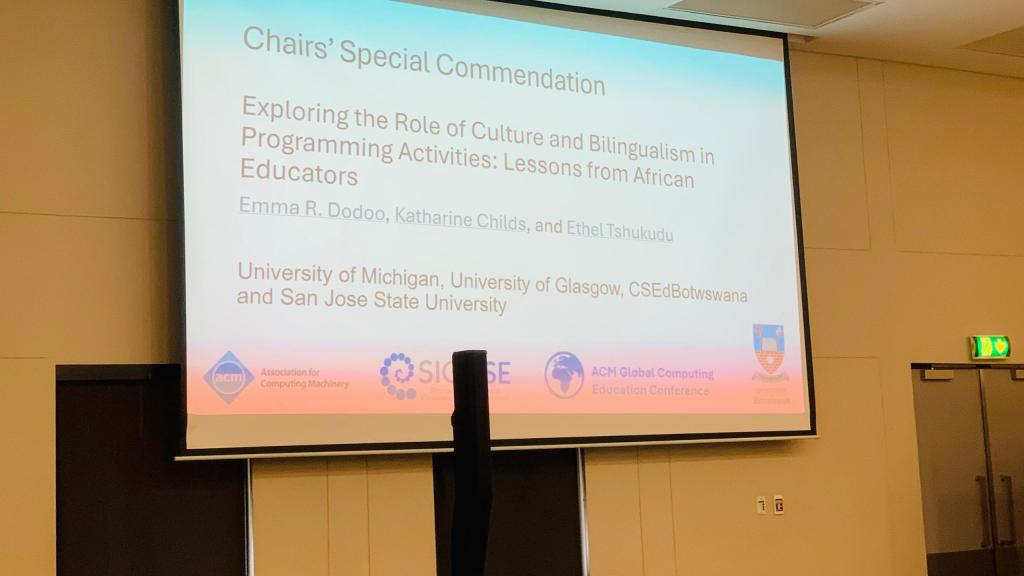
In this work, I collaborated with Emma R. Dodoo and Dr. Ethel Tshukudu to explore how CS can be delivered in a culturally relevant way to Batswana students. We found that, as in many other contexts, relatable examples and a balanced approach to adapting materials were both considered important to teachers. We also found that teachers adopted a bilingual approach to delivering programming activities in order to overcome challenges such as diverse dialects and difficulties with direct translation. This paper received a Chair’s Special Commendation at the conference.
Secondary Students’ Conceptions of AI in an African Country
In this study, we surveyed 86 secondary students aged 16-18 in Botswana, to explore their conceptions and use of AI technologies. Results showed that all students had used AI tools, including 95% for their homework. However, their conceptions of AI also lacked awareness of the social and ethical aspects of AI. This shows a critical gap between student practice and formal education and highlights the importance of introducing AI literacy into the Botswana curriculum. Thank you to my co-authors Dr. Ethel Tshukudu, Gaokgakala Alogeng, Doug Case, Tebogo Videlmah Molebatsi and Emma R. Dodoo.
The Story Continues
Through writing as part of an international team, I have learned that collaboration isn’t always easy, but it’s always worthwhile. Each shared document, early-morning message, and late-night conversation becomes part of a story that none of us could have written alone. As we keep writing together, I hope our work continues to bridge perspectives, grounded in respect and a shared desire to learn from one another.
 CSEd PhD